
Kitchens, bathrooms, insulation, and outdoor living spaces deliver the most reliable value uplift for New Zealand homeowners. The trade-off is straightforward: high-visibility projects in these categories consistently remove buyer objections and lift sale prices, while over-specced finishes in modest suburbs risk spending more than you can recover. Before committing to any major spend, the single most useful step is a free market appraisal from a local agent to identify your suburb ceiling — the price beyond which buyers in your area simply will not go.
The highest-impact projects for most Auckland homeowners are:
- Kitchen refresh or renovation — buyers inspect kitchens first; even a mid-range update removes the most common reason for a lower offer
- Bathroom refresh or renovation — clean, modern bathrooms signal maintenance and hygiene; a second bathroom adds meaningful appeal for families
- Insulation and heating (heat pump) — now a baseline buyer expectation in New Zealand, not a bonus feature
- Indoor–outdoor flow and decking — Kiwi buyers pay a premium for usable outdoor living; a well-built deck can return close to its cost
- Flooring and repaint — the fastest ROI per dollar spent; a professional repaint alone can return more than it costs
- Landscaping and kerb appeal — first impressions form within seconds; tidy gardens and a fresh exterior lift perceived value before buyers step inside
- Adding a bathroom or bedroom — high upside in the right suburb, but carries the greatest overcapitalisation risk if the suburb ceiling is low
Pro Tip: Get a written market appraisal from a local Auckland agent before locking in any spend above $10,000. That single document tells you the suburb ceiling, what comparable homes have sold for, and which specific features buyers in your area are paying more for.
Table of Contents
- 1. Kitchen refresh or renovation
- 2. Bathroom refresh or renovation
- 3. Insulation and heating (heat pump)
- 4. Indoor–outdoor flow and decking
- 5. Flooring and professional repaint
- 6. Landscaping and kerb appeal
- 7. Adding a bathroom or bedroom
- How to pick the right renovation and avoid overcapitalising
- Ballpark NZ costs and realistic timelines
- Why energy efficiency now shapes buyer decisions in New Zealand
- A practical checklist for running a renovation that adds value
- Key takeaways
- The renovations that actually move the needle
- Sortedhomesolutions handles the whole renovation for you
- Useful NZ sources and further reading
1. Kitchen refresh or renovation
A dated kitchen is the number one reason buyers negotiate a lower price. Modernising it — even without a full gut-and-rebuild — removes that objection and can materially lift your sale price.
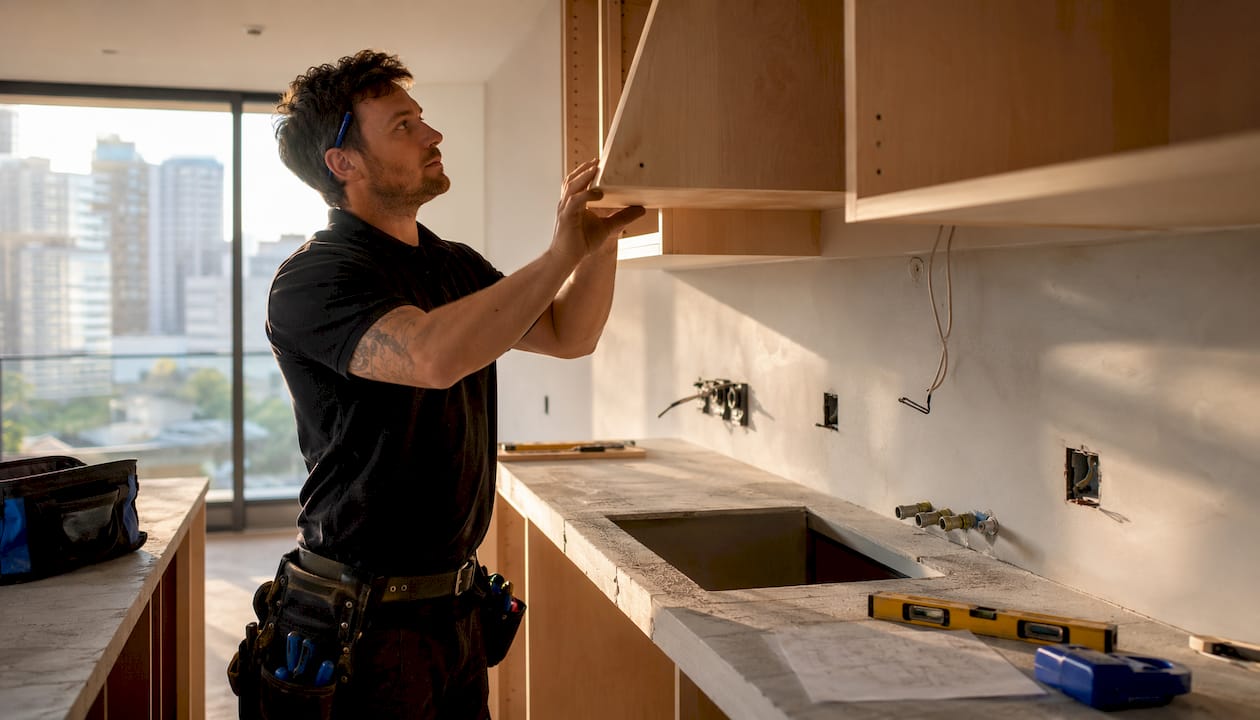
The key is matching the specification to your suburb. A $60,000–$80,000 full kitchen renovation with stone benchtops and custom cabinetry makes sense in Remuera or Herne Bay. In Papakura or Manurewa, a $15,000–$25,000 refresh (new doors, benchtop, splashback, and appliances) will return more relative to cost. Detailed Auckland cost breakdowns confirm that mid-range remodels consistently outperform luxury overhauls on ROI.
Common pitfall: Specifying imported stone, high-end appliances, and custom joinery in a suburb where comparable homes sell with laminate benchtops. You pay for the upgrade; the buyer pays the suburb price.
| Dimension | Detail |
|---|---|
| Typical NZ cost range | $15,000–$80,000 depending on scope and suburb |
| Estimated ROI | High (mid-range refresh); Medium (full luxury fit-out) |
| Time to complete | 2–6 weeks |
| Buyer appeal | Universal — families, first-home buyers, investors |
| Consent / LBP needed | Yes if moving plumbing or electrical; LBP for structural changes |
2. Bathroom refresh or renovation
Buyers expect clean, functional bathrooms. An outdated one with cracked tiles, old vanities, or poor ventilation signals deferred maintenance and invites lower offers. A fresh, well-lit bathroom — even a modest one — communicates that the home has been looked after.
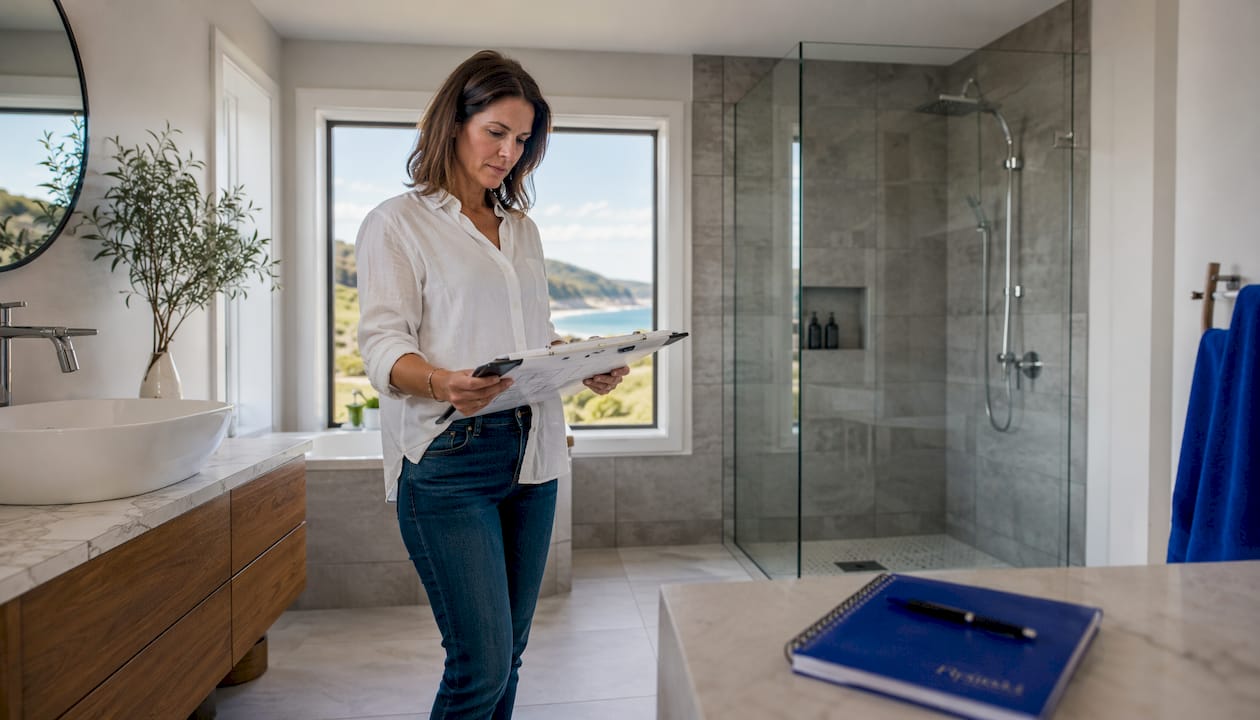
Adding a second bathroom or en suite carries the highest upside of any single room addition, particularly for family buyers. CoreLogic and OneRoof reporting shows that adding bathrooms can deliver substantial uplifts in certain regions, though results vary by area. In Auckland's mid-ring suburbs, a second bathroom often justifies its cost; in lower-priced areas, check the suburb ceiling first.
Common pitfall: Heated floors and freestanding baths in a suburb where buyers are comparing your home to $650,000 units. Stick to quality mid-range fittings and focus on layout and light.
| Dimension | Detail |
|---|---|
| Typical NZ cost range | $15,000–$25,000 (refresh to mid-range renovation) |
| Estimated ROI | High (refresh); Medium–High (full renovation) |
| Time to complete | 1–4 weeks |
| Buyer appeal | Families, owner-occupiers, rental investors |
| Consent / LBP needed | Yes for plumbing changes; LBP required |
3. Insulation and heating (heat pump)
Insulation and heating are no longer optional extras in New Zealand — they are buyer expectations. EECA's annual report confirms that energy-efficiency measures are central to government-backed programmes and strongly influence market appeal. Buyers now factor running costs and warmth into their offers, not just aesthetics.
The Warmer Kiwi Homes programme (administered by EECA/MBIE) provides subsidised insulation and heating for eligible homeowners, which can significantly reduce your out-of-pocket cost. Check eligibility before budgeting — grants can cover a meaningful portion of ceiling and underfloor insulation costs.
Common pitfall: Installing a heat pump without addressing ceiling and underfloor insulation first. The pump works harder, running costs stay high, and buyers notice.
| Dimension | Detail |
|---|---|
| Typical NZ cost range | $3,000–$12,000 (insulation + heat pump, after grants) |
| Estimated ROI | High — approaches near-100% in many cases |
| Time to complete | 1–5 days |
| Buyer appeal | All buyers; mandatory for rental compliance |
| Consent / LBP needed | Electrical connection for heat pump requires licensed electrician |
4. Indoor–outdoor flow and decking
Kiwi buyers consistently pay more for homes where the living area connects to a usable outdoor space. A well-built deck with good sun orientation and a clear sightline from the kitchen or living room adds lifestyle appeal that photographs well and sells fast.
Decks over 1.5 metres above ground level require a building consent from Auckland Council. Unconsented decks are a known liability at sale — they appear on LIM reports and can slow settlement or reduce price. Always use a Licensed Building Practitioner (LBP) for structural work and keep the consent documentation.
Common pitfall: Timber decks built without consent or with untreated timber that deteriorates within a few years. Buyers and their building inspectors notice both.
| Dimension | Detail |
|---|---|
| Typical NZ cost range | $5,000–$20,000 total for paint and flooring |
| Estimated ROI | Medium–High in lifestyle-focused markets |
| Time to complete | 1–3 weeks |
| Buyer appeal | Families, lifestyle buyers, entertaining-focused buyers |
| Consent / LBP needed | Yes if over 1.5m high; LBP required for structural work |
5. Flooring and professional repaint
A professional repaint is the most cost-effective single upgrade available to most sellers. NZ market guidance consistently shows that a well-executed paint job — using quality products in neutral, market-tested colours — often returns more than it costs. Resene's colour guidance is widely used by Auckland renovators for this reason: their palettes are calibrated to NZ light conditions and buyer preferences.
New flooring (timber, vinyl plank, or quality carpet) complements a fresh paint job and removes one of the most common buyer objections in older homes. Together, paint and flooring can transform the perceived condition of a property for $5,000–$20,000 total.
Common pitfall: Choosing bold or highly personal colours. Neutral tones — warm whites, soft greys, and natural timbers — appeal to the widest buyer pool.
| Dimension | Detail |
|---|---|
| Typical NZ cost range | $5,000–$20,000 total for paint and flooring |
| Estimated ROI | Very High — often exceeds cost |
| Time to complete | 3–10 days |
| Buyer appeal | Universal |
| Consent / LBP needed | No |
6. Landscaping and kerb appeal
Buyers form their first impression before they reach the front door. A tidy garden, clean driveway, fresh exterior paint, and well-maintained fencing signal that the home has been cared for. This perception carries through the entire inspection.
Kerb appeal improvements are among the lowest-cost, highest-return projects available. Mowing, edging, mulching garden beds, repainting the letterbox and front fence, and pressure-washing the driveway can be done for a few hundred to a few thousand dollars. For a property about to be listed, these are the jobs to do first.
Common pitfall: Over-investing in elaborate landscaping (retaining walls, irrigation systems, mature plantings) that buyers may not value or want to maintain.
7. Adding a bathroom or bedroom
An extra bathroom or bedroom can add significant value — but only when the suburb ceiling supports it. Extensions and full renovations deliver the largest absolute uplifts in higher-priced markets and carry the highest overcapitalisation risk in lower-priced suburbs.
Adding a bedroom or bathroom always requires building consent and LBP sign-off. The consent process through Auckland Council takes time — factor 6–12 weeks for consent approval before work begins. Keep all documentation: consent, LBP certificates, and code compliance certificates. These are required for LIM reports and will be scrutinised by buyers' solicitors at sale.
Interior finishing details matter too. Well-chosen interior doors and joinery can lift the perceived quality of an addition without adding significant cost — a detail that experienced buyers notice.
| Dimension | Detail |
|---|---|
| Typical NZ cost range | $40,000–$120,000+ depending on scope |
| Estimated ROI | High in premium suburbs; Medium–Low in modest suburbs |
| Time to complete | 8–20 weeks (including consent) |
| Buyer appeal | Families, investors, multi-generational buyers |
| Consent / LBP needed | Yes — always |
How to pick the right renovation and avoid overcapitalising
Start with a local market appraisal, not a renovation plan. A qualified Auckland agent can tell you the suburb ceiling — the realistic maximum price buyers will pay for a home in your street — and which specific features are driving offers in your area right now. That information shapes every decision that follows.
A practical decision framework:
- Define your goal. Are you selling within 12 months, or renovating to live in for 5+ years? Short-term sellers should prioritise visible, high-ROI fixes. Long-term owners have more flexibility to invest in comfort.
- Check the suburb ceiling. Use recent comparable sales (your agent can pull these) to identify the price cap. If your home is already near the ceiling, cosmetic upgrades will serve you better than structural additions.
- Shortlist buyer objections. Walk through your home as a buyer would. What would make you offer less? Dated kitchen, single bathroom, cold rooms, tired paint — these are the projects to prioritise.
- Test cost versus likely uplift. A $25,000 luxury kitchen remodel may not add $25,000 in value, but a $2,000 paint job often returns more than it costs. Match spend to expected return, not personal preference.
- Match finishes to comparables. Resene's guidance on avoiding overcapitalisation is clear: choose materials and finishes that match the quality of homes selling in your suburb, not the suburb you wish you were in.
Pro Tip: Ask your agent to show you three recently sold comparable properties before you finalise your renovation list. The gap between what those homes had and what yours has now is your renovation brief.
Overcapitalisation is most common when homeowners spec finishes that exceed local comparable stock. A $200,000 renovation in a suburb where homes sell for $850,000 is a high-risk position — that gap may never be recovered at resale.
Ballpark NZ costs and realistic timelines
Budgeting accurately is the difference between a renovation that adds value and one that drains it. The table below gives working ranges for common projects. Treat these as starting points — actual costs vary by property age, condition, and Auckland labour rates.
| Project | Typical NZ cost range | Time to complete | Notes |
|---|---|---|---|
| Professional repaint (interior) | — | 3–7 days | High ROI; do before photography |
| Minor kitchen refresh | $10,000–$25,000 | 2–3 weeks | New doors, benchtop, appliances |
| Full kitchen renovation | $30,000–$80,000 | — | LBP if structural/plumbing moves |
| Minor bathroom refresh | — | 1–2 weeks | Retile, vanity, fixtures |
| Full bathroom renovation | — | 2–4 weeks | LBP required for plumbing |
| Deck (ground level) | $5,000–$20,000 total for paint and flooring | 1–2 weeks | Consent if over 1.5m |
| Insulation + heat pump | $3,000–$12,000 | 1–5 days | Warmer Kiwi Homes grants available |
| New flooring | $5,000–$15,000 | 3–7 days | Vinyl plank or timber most popular |
| Landscaping / kerb appeal | $500–$5,000 | 1–3 days | Fastest ROI per dollar |
| Room addition / extension | $60,000–$150,000+ | 10–20 weeks | Consent always required |
A well-targeted spend of around $30,000 focused on paint, a kitchen refresh, and garden presentation can return more than the outlay when the work is done well and the suburb supports it.
Pro Tip: Add a 25% contingency to every budget. Older Auckland homes — particularly those built before 1980 — frequently reveal hidden defects once walls or floors are opened: substandard wiring, leaking pipes, or non-compliant framing. A contingency prevents a half-finished project, which actively damages sale prospects.
For sequencing: paint and staging happen last, immediately before photography and listing. Consented structural work, extensions, and kitchen or bathroom renovations need to be completed and signed off well before the listing date — allow time for code compliance certificates to be issued.
Why energy efficiency now shapes buyer decisions in New Zealand
Insulation and heating have moved from "nice to have" to a baseline buyer expectation. EECA's reporting confirms that energy-efficiency measures are central to government-backed programmes and materially influence market appeal. Buyers factor warmth, dryness, and running costs into their offers — not just how a home looks.
The Warmer Kiwi Homes programme provides subsidised ceiling insulation, underfloor insulation, and heating for eligible homeowners. Checking eligibility before you budget is worth doing — grants can reduce your out-of-pocket cost significantly. The programme is administered by EECA and MBIE, and eligibility is based on income, property type, and existing insulation levels.
Key reasons energy efficiency upgrades now rank so highly:
- Healthy Homes Standards have set a compliance floor for rental properties, making insulation and heating mandatory in that sector and raising buyer expectations across the board
- Lower running costs are a direct selling point — buyers calculate what a home will cost to heat and run, and warm, dry homes attract stronger offers
- Health outcomes are increasingly understood by buyers; cold, damp homes are associated with respiratory illness, and this is now part of the buyer conversation
- Government backing through EECA programmes signals that these upgrades are valued at a policy level, reinforcing buyer confidence
Pro Tip: Visit the Warmer Kiwi Homes programme page before getting insulation quotes. If you qualify for a grant, your ROI on this upgrade improves substantially — and the work is done by vetted, approved contractors.
A practical checklist for running a renovation that adds value
Execution quality determines whether a renovation adds value or creates liability. Poor workmanship, missing consents, and incomplete documentation can reduce your sale price or delay settlement.
Before work starts
- Get a written market appraisal and identify the suburb ceiling
- Confirm which work requires building consent from Auckland Council
- Engage a Licensed Building Practitioner (LBP) for any structural, plumbing, or electrical work
- Set a budget with a 25% contingency
- Get at least two written quotes; confirm scope in writing before work begins
During work
- Keep a site diary noting progress, inspections, and any variations to scope
- Request interim inspections from Auckland Council at the stages specified in your consent
- Check workmanship at each stage — it is far easier to correct issues before the next trade arrives
- Document everything with photos
After work is complete
- Obtain the Code Compliance Certificate (CCC) from Auckland Council for all consented work
- Collect LBP certificates and producer statements from each licensed trade
- Gather warranties for appliances, materials, and workmanship
- Keep all receipts and invoices — these support your LIM disclosure and demonstrate value to buyers
- Commission before-and-after photos for your listing; real before-and-after results are among the most persuasive marketing tools available to sellers
Pro Tip: Using a full-service contractor like Sortedhomesolutions means one point of contact manages consent applications, trade scheduling, and quality checks. That coordination alone prevents the most common execution failures — trades working out of sequence, consent lapses, and incomplete documentation at sale.
Unconsented work is a documented liability. It appears on LIM reports, can slow or reduce sale price, and may require expensive remediation before settlement. Council sign-off and LBP certification protect your resale value and simplify the legal disclosure process at sale. Structural, plumbing, and electrical work without proper sign-off is not a grey area — it is a risk that buyers' solicitors will flag.
For guidance on which jobs you can safely handle yourself versus which need licensed trades, the DIY vs professional renovation guide for Auckland homeowners covers this in detail.
Key takeaways
The renovations that most reliably add value in New Zealand are kitchen and bathroom upgrades, insulation and heating, outdoor living, and cosmetic fixes — provided the spend stays within the suburb ceiling.
| Point | Details |
|---|---|
| Check the suburb ceiling first | Get a written market appraisal before committing to any spend above $10,000. |
| Prioritise kitchens, bathrooms, insulation, and decks | These four categories consistently remove buyer objections and lift sale prices. |
| Avoid over-speccing finishes | Match material quality to local comparables, not personal preference, to prevent overcapitalisation. |
| Budget a 25% contingency | Older Auckland homes frequently reveal hidden defects that increase costs once work begins. |
| Secure consent and LBP sign-off | Unconsented work appears on LIM reports and can reduce or delay your sale price. |
| Sortedhomesolutions for full-service delivery | Sortedhomesolutions manages consents, all trades, and project coordination from a single point of contact in Auckland. |
The renovations that actually move the needle
Most renovation guides focus on what to do. The harder question is what not to do — and in Auckland's current market, that matters more than ever.
The suburb ceiling is real, and it is ruthless. Homeowners who spend $80,000 on a kitchen in a suburb where the median sale price is $900,000 are not investing — they are subsidising the next buyer. The market does not reward personal taste; it rewards the removal of buyer objections. A clean, functional kitchen in a $900,000 suburb does that job. A bespoke one does not do it any better.
Energy efficiency has genuinely changed the calculus. Five years ago, insulation was a compliance issue for landlords. Now it is a buyer expectation across the board. Warm, dry, and cheap to run is a selling point that shows up in offers — not just in marketing copy. The Warmer Kiwi Homes programme makes this one of the best-value upgrades available, particularly for homeowners who qualify for grants.
The other thing most guides understate is the cost of poor execution. Unconsented work, unlicensed trades, and missing documentation do not just create legal risk — they actively reduce what buyers will pay. A buyer's solicitor who finds unconsented work on a LIM report will advise their client to either walk away or negotiate a significant discount. That discount is almost always larger than the cost of doing the job properly in the first place.
The practical takeaway: spend less on finishes, spend more on execution. A mid-range kitchen done properly, consented, and documented will outperform a luxury kitchen with missing paperwork every time.
Sortedhomesolutions handles the whole renovation for you
Renovation planning is straightforward on paper. In practice, coordinating builders, plumbers, electricians, plasterers, and painters — while managing consent timelines and keeping the project on budget — is where most homeowners run into trouble.

Sortedhomesolutions is a full-service renovation contractor based in Auckland. The team handles kitchens, bathrooms, decking, flooring, painting, plastering, electrical, and plumbing under one roof, with fixed-fee packages for kitchens and bathrooms so you know the cost before work begins. Consent applications, LBP coordination, and trade scheduling are managed centrally — you deal with one contact, not six separate contractors. For homeowners preparing to sell, that means a clean paper trail, proper sign-offs, and before-and-after documentation ready for your listing agent.
View kitchen and bathroom pricing or get in touch to discuss your project and get a quote.
Useful NZ sources and further reading
- EECA Warmer Kiwi Homes annual report — Official reporting on energy-efficiency programmes, grant eligibility, and market impact of insulation and heating upgrades.
- Auckland Council building consents — The primary source for consent requirements, application processes, and LBP obligations in Auckland.
- NZ Government: renovating your home — Plain-language guidance on planning a renovation, consent obligations, and licensed trades requirements.
- OneRoof: how much is too much? — Analysis of suburb ceilings and the risk of overcapitalising in New Zealand's regional markets.
- OneRoof: renovations that add up to $400,000 in value — CoreLogic-backed reporting on which renovation types deliver the largest uplifts by region.
- Resene: how to avoid over-capitalising your reno — Practical guidance on matching finish quality to suburb comparables; useful for specification decisions.
- Sortedhomesolutions: kitchen and bathroom renovation costs Auckland — Detailed Auckland cost breakdowns for the two highest-ROI renovation categories.
- Sortedhomesolutions: do you need a permit for a renovation in Auckland? — Practical guide to building consent and LBP requirements specific to Auckland homeowners.
- Sortedhomesolutions: house renovations before and after NZ — Real Auckland renovation outcomes with before-and-after documentation and value uplift context.
- One Day Doors & Closets: upgrade your home's value — External perspective on how interior joinery and door upgrades influence buyer perception and perceived quality.