
Building consent is the formal approval required under New Zealand's Building Act 2004 before most renovation work can legally begin. If you are planning a renovation in Auckland, you almost certainly need a permit for any work that touches your home's structure, plumbing, drainage, or waterproofing. The Auckland Council acts as the Building Consent Authority (BCA) for the region, and it is responsible for assessing and issuing these approvals. Getting this wrong carries real legal and financial consequences, so understanding the rules before you lift a hammer is the right starting point.
Do you need a permit for a renovation?
Most building work requires a building consent under the Building Act 2004 unless it falls within a specific exemption. That is the legal default in New Zealand, and it applies to homeowners just as much as it applies to developers. The burden of confirming whether your project is exempt sits with you, not your builder.
Renovations that typically require building consent include:
- Structural changes such as removing or altering load-bearing walls
- Extensions and additions to your home's footprint or roofline
- Plumbing and drainage work, including moving or adding fixtures
- Waterproofing, particularly in bathrooms, wet areas, and laundries
- Recladding of exterior walls
- Adding a new bathroom or relocating an existing one
Cosmetic work generally sits outside this requirement. Painting, replacing floor coverings, and swapping out kitchen cabinets in the same position typically do not need consent. Like-for-like replacements in the same location are also usually exempt under Schedule 1 of the Building Act.
Pro Tip: Even when your project qualifies as exempt, the work must still comply with the New Zealand Building Code. Exemption means no consent is needed, not that no rules apply.
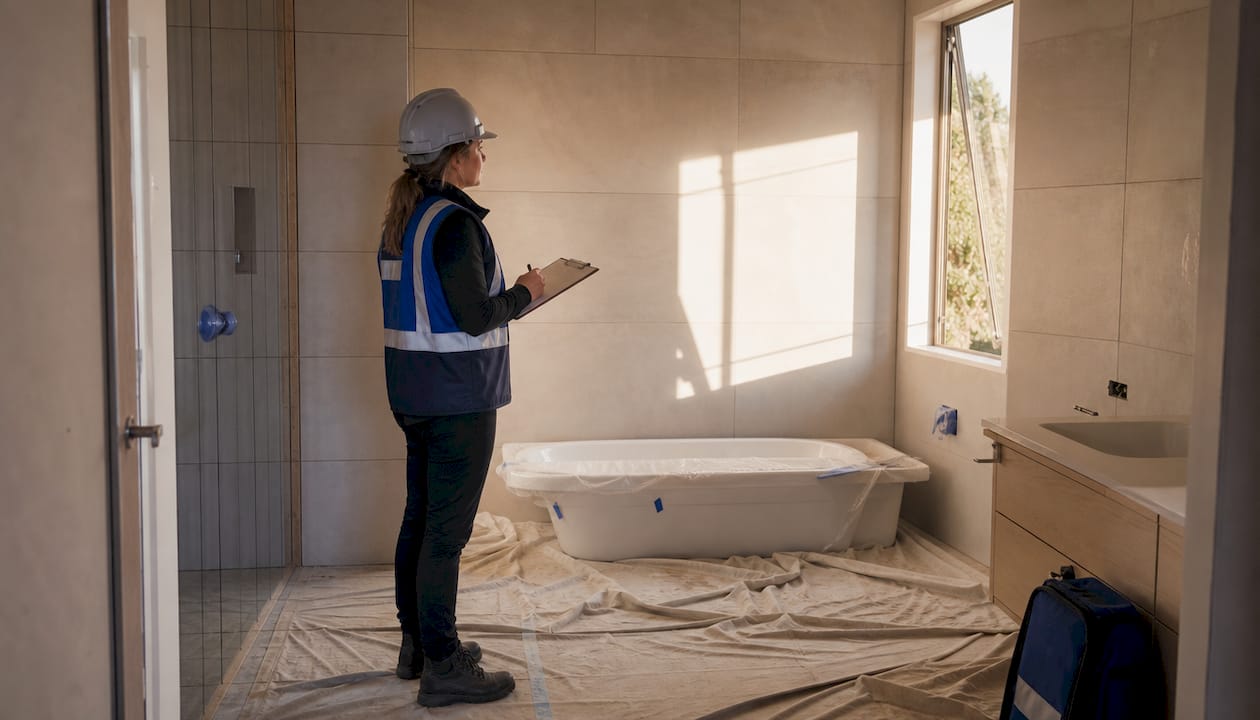
One common misconception is that small renovations are automatically exempt. Bathrooms often require consent for waterproofing membranes alone, regardless of the overall project size. A bathroom refresh that involves moving a shower or adding a new drain crosses into consent territory, even if the rest of the work looks minor.
| Work type | Consent required? |
|---|---|
| Removing a load-bearing wall | Yes |
| Adding a new bathroom | Yes |
| Waterproofing a wet area | Yes |
| Moving plumbing fixtures | Yes |
| Painting interior walls | No |
| Like-for-like fixture replacement | No |
| New deck under 1.5 metres high | Check Schedule 1 |
What is the difference between building consent and resource consent?
Building consent confirms that construction meets the Building Code. Resource consent, on the other hand, relates to land use and zoning under the Auckland Unitary Plan. These are two separate approvals issued by two separate parts of the council.
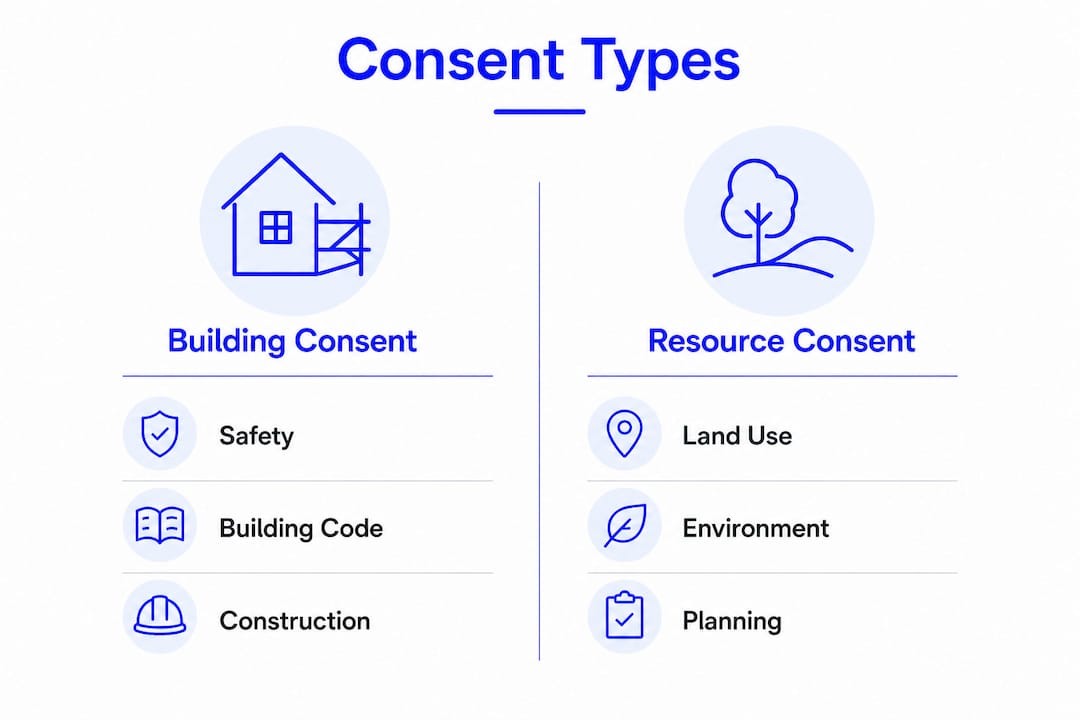
A single renovation project may require one, both, or neither consent depending on its location and scope. Most internal renovations only need building consent. Resource consent becomes relevant when your project affects the site itself, such as building closer to a boundary than the Unitary Plan allows, exceeding height limits, or working within a heritage overlay area.
To identify which consents apply to your project, follow these steps:
- Check the Auckland Unitary Plan using the council's GIS viewer to identify any overlays or zoning rules affecting your property.
- Contact Auckland Council's duty planner for a pre-application meeting if your project is near a boundary or in a heritage area.
- Confirm building consent requirements with a licensed building practitioner or architect before finalising your design.
- Submit both applications together where possible, as processing times run concurrently and this avoids sequential delays.
Pro Tip: Heritage overlays in suburbs like Ponsonby, Devonport, and Grey Lynn often trigger resource consent requirements for exterior changes. Check your property's overlay status before committing to a design.
How does the building permit application process work?
The council processes building consent applications within 20 working days after receiving a complete application. That 20-day clock does not start until the council confirms your application is complete. Submitting incomplete documentation is the single most common cause of delays.
A complete application typically includes:
- Detailed architectural plans drawn to scale, showing existing and proposed layouts
- Engineering reports for any structural work, signed by a chartered structural engineer
- Producer statements from licensed professionals confirming design compliance
- Site plans showing the property boundaries and the location of proposed work
- Specifications describing materials, methods, and Building Code compliance pathways
Incomplete applications are a common cause of delays, and councils check completeness before starting the assessment clock. A request for further information (RFI) pauses the 20-day period entirely. One missing producer statement can add weeks to your timeline.
Building consents valued over $20,000 incur BRANZ, Quality, and Insurance levies. Projects valued over $65,000 attract an additional MBIE levy. Work cannot legally begin until the council issues the consent and all fees are paid.
Once the work is underway, the council will conduct inspections at key stages. After all inspections pass, you receive a Code Compliance Certificate (CCC). The CCC is the document that proves your renovation was completed to the required standard, and it matters significantly when you sell or refinance.
Pro Tip: Book your council inspections in advance. Inspection slots can be limited, and delays here can hold up your entire project timeline.
For a clear picture of what your renovation might cost before you apply, the renovation cost calculator from Sortedhomesolutions is a practical starting point.
What happens if you don't get a permit for renovations?
Unconsented building work can lead to legal penalties, may require a certificate of acceptance, and can affect your insurance and property value. The consequences are not theoretical. Auckland Council has the authority to issue a notice to fix, requiring you to bring unconsented work into compliance at your own expense.
The risks of proceeding without consent include:
- Remedial orders requiring you to demolish or alter completed work
- Insurance voids, as many policies exclude unconsented work from cover
- Resale complications, since buyers' lawyers and banks routinely check LIM reports for unconsented work
- Difficulty obtaining a mortgage, as lenders treat unconsented work as a liability
- Personal liability if unconsented work causes injury or damage
Exemptions under Schedule 1 of the Building Act are not retrospective. If you complete work without consent and later discover it required one, you cannot simply claim it was exempt after the fact. You must apply for a certificate of acceptance from the council, which is a more complex and expensive process than obtaining consent upfront.
A certificate of acceptance is the council's mechanism for retrospectively assessing unconsented work. The council is not obligated to issue one, and it will only cover work that can still be inspected. Work that is already concealed behind linings may need to be opened up for inspection, adding significant cost.
Practical tips for a smooth permit approval
Engaging building professionals early in the design phase prevents costly redesigns and application delays. This is the single most effective step you can take before submitting any application.
- Hire a licensed building practitioner or architect to prepare your plans. Professionally drawn plans reduce the likelihood of RFIs from the council.
- Book a pre-application meeting with Auckland Council before finalising your design. The council's duty building officer can confirm consent requirements and flag potential issues early.
- Prepare a complete documentation package before submitting. Check the council's application checklist and confirm every item is included.
- Understand the levy structure before you budget. Factor in BRANZ, Quality, Insurance, and MBIE levies for projects above the relevant thresholds.
- Keep all certificates, receipts, and producer statements in a dedicated file. These documents are required for the CCC and are valuable records for future sales.
- Apply for a certificate of acceptance promptly if you discover unconsented work on a property you have purchased. Acting quickly limits your legal exposure.
Pro Tip: Ask your architect or builder to confirm in writing which specific Building Code clauses their design complies with. This level of detail in your application reduces the chance of an RFI.
For a broader view of managing the full renovation process, Sortedhomesolutions has a practical homeowner's renovation guide covering project management from start to finish.
Key takeaways
Building consent is required for most Auckland renovations involving structural, plumbing, drainage, or waterproofing work, and proceeding without it creates legal, financial, and resale risks that far outweigh the cost of applying correctly.
| Point | Details |
|---|---|
| Consent is the legal default | Most renovation work needs building consent unless specifically listed as exempt under Schedule 1. |
| Small jobs can still trigger consent | Waterproofing in a bathroom requires consent regardless of the project's overall size. |
| Two consents may apply | Building consent covers the Building Code; resource consent covers land use under the Auckland Unitary Plan. |
| Complete applications avoid delays | The 20-working-day clock only starts once the council confirms your application is complete. |
| Unconsented work has lasting consequences | It can void insurance, complicate resale, and require expensive retrospective council processes. |
What I have learned from watching homeowners skip the permit step
Rudi here. After years of working on Auckland renovations, the pattern I see most often is homeowners underestimating what triggers consent. The assumption is usually that if the work looks cosmetic, it must be exempt. That assumption is wrong more often than people realise.
The most expensive mistakes I have seen involve bathrooms. A homeowner tiles over a wet area without a waterproofing membrane that meets the Building Code, no consent is obtained, and years later a leak causes significant damage. The insurer declines the claim because the work was unconsented. The homeowner is left covering the repair cost personally.
The other misconception I encounter regularly is that obtaining consent is purely a bureaucratic burden with no upside. A building consent and code compliance certificate adds real property value by reassuring banks, insurers, and future buyers. When you sell, a clean LIM report is a genuine asset. Buyers' lawyers look for unconsented work, and anything flagged on the LIM gives buyers leverage to negotiate the price down or walk away.
My honest advice is to treat the permit process as part of the project budget from day one, not as an afterthought. The upfront cost of professional plans and council fees is almost always less than the cost of fixing a compliance problem after the fact.
— Rudi
Renovation permits made straightforward with Sortedhomesolutions
Navigating building consent applications takes time, documentation, and a clear understanding of what Auckland Council requires.

Sortedhomesolutions handles the full renovation process, from preparing compliant documentation and coordinating with the council, to managing inspections and keeping your project on schedule. The team covers all trades under one roof, so you are not chasing multiple contractors to pull together the paperwork your application needs. If you are ready to get your renovation moving in the right direction, get in touch with the team or review renovation pricing for kitchen and bathroom projects.
FAQ
Do I need a building permit for a bathroom renovation?
Yes, in most cases. Bathroom renovations that involve waterproofing, moving plumbing, or adding fixtures require building consent under the Building Act 2004, even if the overall project is small in scale.
How long does building consent take in Auckland?
Auckland Council has 20 working days to process a complete building consent application. Incomplete applications pause this clock, so thorough documentation is the most effective way to avoid delays.
What happens if I renovate without a building permit?
Unconsented work can result in legal penalties, insurance voids, and resale complications. You may also be required to apply for a certificate of acceptance, which is more complex and costly than obtaining consent before work begins.
What is the difference between building consent and resource consent?
Building consent confirms your construction meets the New Zealand Building Code. Resource consent relates to land use and zoning rules under the Auckland Unitary Plan, and may be required separately or alongside building consent depending on your project and location.
Which renovations are exempt from building consent?
Cosmetic work such as painting, replacing floor coverings, and like-for-like fixture replacements in the same position are generally exempt under Schedule 1 of the Building Act 2004. Even exempt work must still comply with the Building Code and may require licensed tradespeople.