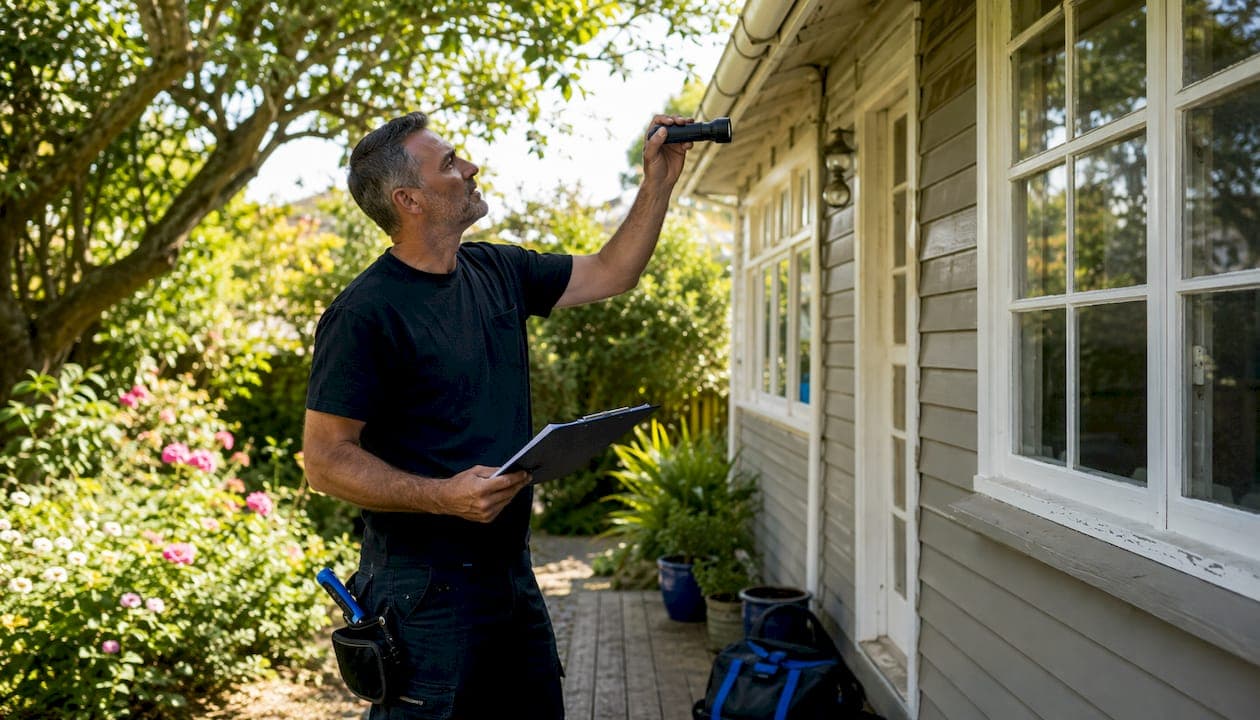
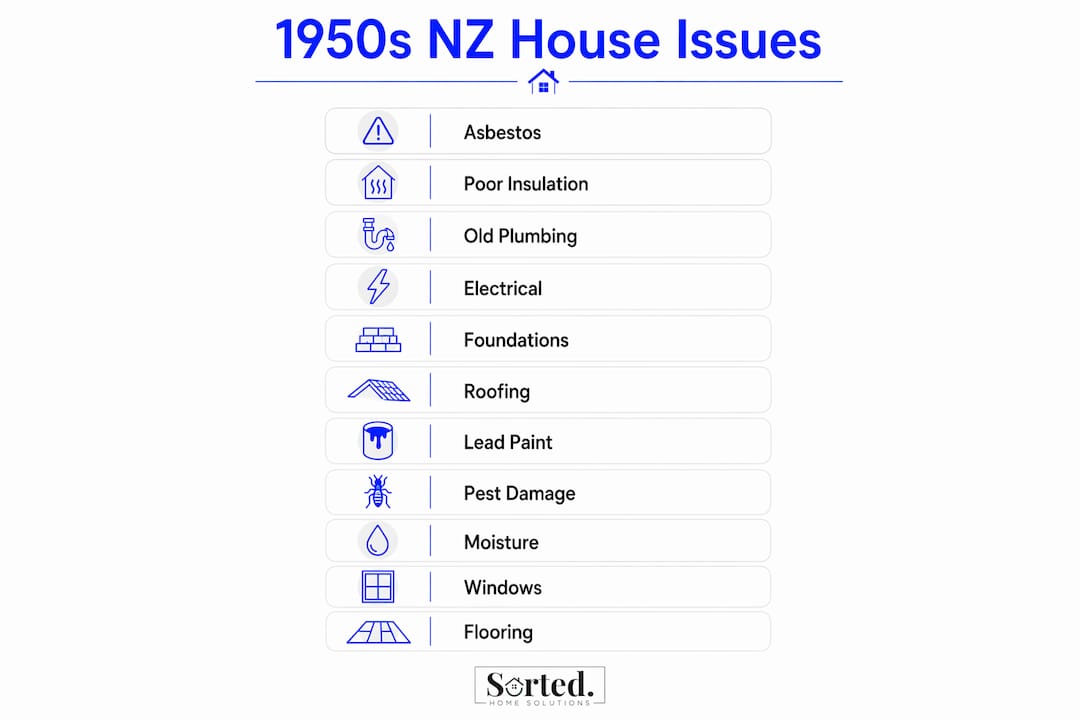
If you are buying or renovating a 1950s house in New Zealand, you will likely encounter a predictable set of issues. The most common problems with 1950s houses in NZ are:
- Asbestos in insulation, ceiling tiles, and wall linings
- Poor or no insulation, causing high energy costs and cold interiors
- Corroded cast iron and galvanised plumbing prone to leaks
- Outdated electrical wiring that does not meet current safety standards
- Foundation and pile problems including dry rot and uneven settlement
- Corrugated iron roofing with corrosion and weathering damage
- Lead-based paint on walls, trims, and joinery
- Termite and pest damage to structural timber
- Moisture, mould, and leaky home signs in wall and ceiling linings
- Single-glazed windows with significant heat loss and draughts
- Deteriorating flooring including asbestos-backed vinyl and worn timber
Each of these carries real cost and safety implications. The sections below explain what to look for, what it costs to fix, and who to call in Auckland.
What are the main problems in 1950s New Zealand houses?
1. Asbestos in walls, ceilings, and pipe insulation
Asbestos was used widely in 1950s NZ homes for insulation around pipes, in ceiling tiles, and in wall linings such as fibrolite. It is not dangerous when left undisturbed, but any renovation work that cuts, sands, or removes these materials releases fibres that cause serious lung disease. Before any work begins, a licensed asbestos assessor must test suspect materials. Removal requires a licensed asbestos removalist and must follow WorkSafe NZ guidelines.
2. Poor insulation and energy inefficiency
Insulation was almost non-existent in 1950s construction. Walls, floors, and ceilings were built without bulk insulation, and the result is a house that loses heat quickly in winter and overheats in summer. Retrofitting insulation under floors and in ceilings is now one of the most cost-effective upgrades you can make to a house of this era.
3. Cast iron and galvanised plumbing
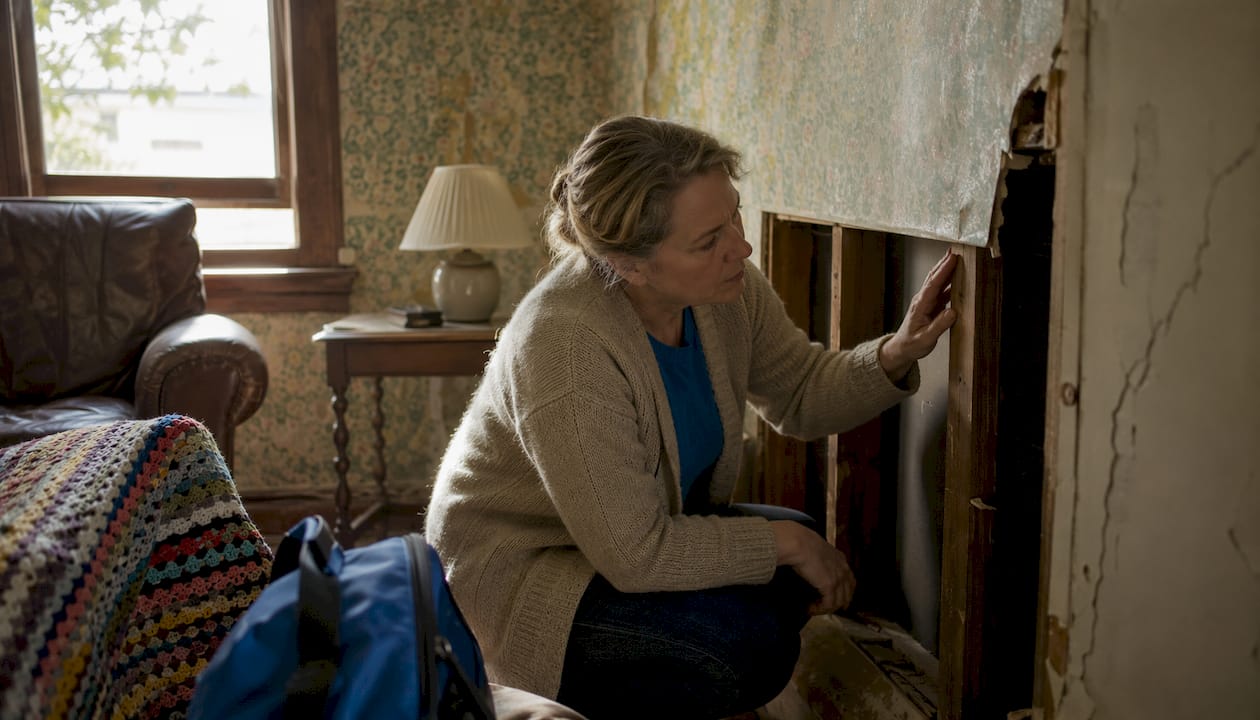
Original plumbing in these homes typically uses cast iron drain pipes and galvanised steel supply lines. Both corrode from the inside over decades. Galvanised pipes develop scale buildup that restricts water flow, while cast iron drains crack and leak. A full replumb to copper or modern PEX pipe is often necessary rather than piecemeal repairs.
4. Outdated electrical wiring
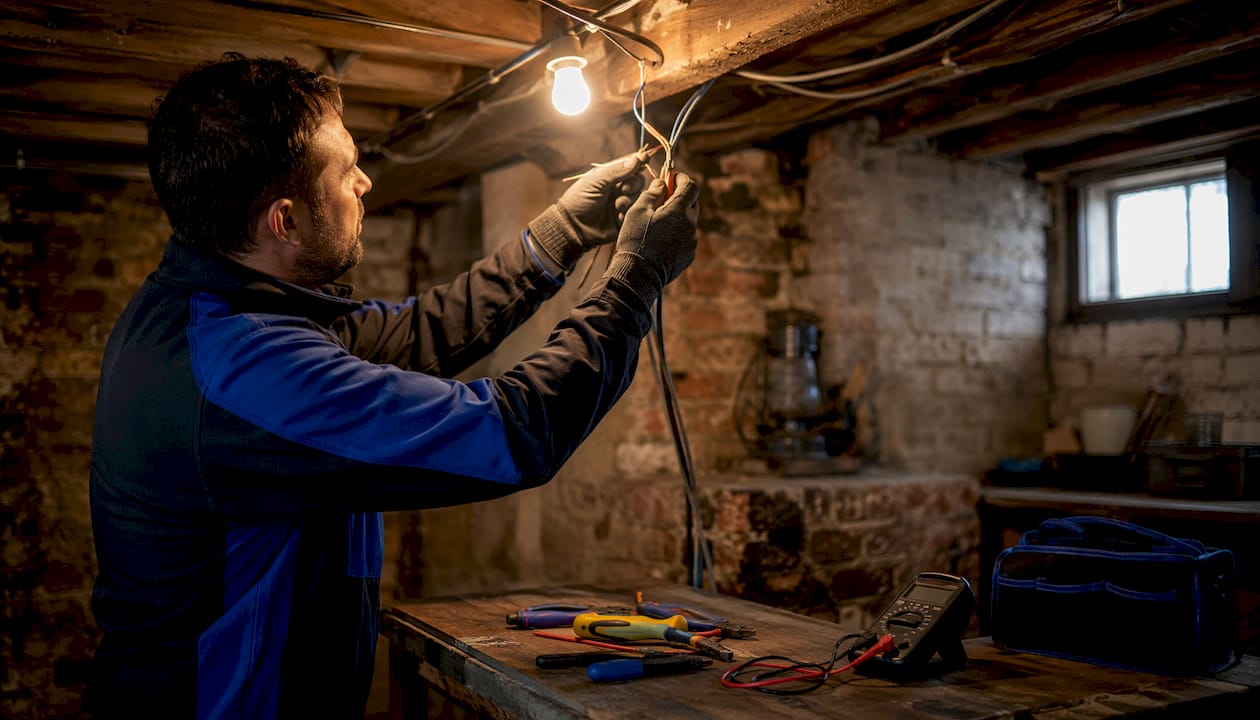
Electrical wiring in 1950s homes frequently falls short of current safety standards. Many properties still have rubber-insulated wiring that has become brittle with age, undersized switchboards, and no residual current devices (RCDs). This creates a genuine fire risk. A licensed electrician should assess the full system before any renovation work starts.
5. Foundation and pile problems
Foundations in 1950s NZ houses were typically concrete piles, but timber sub-floor framing is common and vulnerable to dry rot, especially in damp Auckland conditions. Uneven settlement can cause doors and windows to stick, floors to slope, and cracks to appear in wall linings. A building inspector can probe piles and sub-floor framing to identify how far the damage extends.
6. Corrugated iron roofing and corrosion
Corrugated iron roofing was standard in this era and, after 70-plus years, many roofs show rust, failed flashings, and loose fixings. A corroded roof lets water into the ceiling cavity, which accelerates timber decay and mould growth. Repainting can extend the life of a sound roof, but one with widespread rust usually needs full replacement.
7. Lead-based paint
Lead-based paint is common in 1950s homes on interior walls, window frames, and exterior weatherboards. Sanding or heat-stripping lead paint without precautions creates toxic dust that is hazardous to adults and children alike. Any paint removal on a house of this age should be treated as potentially containing lead until tested otherwise.
8. Termite and pest damage to structural timber
Termites and other pests can hollow out structural framing while leaving the surface intact, making damage invisible until a renovation exposes it. Older homes with no chemical soil treatment are particularly at risk. A pre-purchase building inspection should always include a pest assessment.
9. Moisture, mould, and leaky home indicators
Signs of moisture ingress include water staining on ceiling linings, mould growth in corners, and soft or spongy wall surfaces. Older timber homes rely on ventilation gaps and overhanging eaves to manage moisture. When those details have been altered by previous owners, water can sit in wall cavities for years before becoming visible.
10. Single-glazed windows and draughts
Single-glazed timber sash windows are standard in 1950s homes and provide almost no thermal barrier. Cold air enters through gaps in the sash, around frames, and through the glass itself. Draught-sealing is a low-cost first step, but double-glazing retrofits deliver a far greater improvement to comfort and heating costs.
11. Flooring deterioration
Vinyl sheet flooring from this era often contains asbestos backing, so cutting or lifting it without testing is a risk. Beneath the vinyl, timber floorboards may be sound but are frequently stained, gapped, or uneven. Where sub-floor ventilation has been blocked, boards can show signs of moisture damage or rot.
Pro Tip: When inspecting a 1950s home, start from the roof down: check the roof and gutters first, then the ceiling cavity, walls, sub-floor, and foundations last. This order follows the path water takes through a building and helps you spot connected problems rather than isolated ones.
What do you need to know before renovating a 1950s house in NZ?
Renovating a 1950s house in Auckland involves more than cosmetic updates. The building code, health and safety rules, and council requirements all apply, and skipping any of them creates legal and financial risk.
Building consent and compliance
Council building consent is required for most structural work, plumbing changes, electrical upgrades, and additions. The consent process confirms that the work will meet the current NZ Building Code, not the standards that applied when the house was built. Engaging a licensed building practitioner from the start means the consent documentation is prepared correctly and inspections proceed without delays.
Heritage and character features
Some 1950s homes in Auckland sit within character overlay zones, which restrict changes to the exterior appearance. Check with Auckland Council before altering rooflines, window proportions, or cladding. Preserving original features such as timber joinery and decorative barge boards can also add value, so removal is not always the right call.
Energy efficiency upgrades
Ceiling and underfloor insulation can usually be retrofitted without a consent. Double-glazing retrofits to existing timber frames are also available and do not require structural changes in most cases. These upgrades reduce heating costs and improve the comfort of the house year-round. For a full picture of what these upgrades cost, a renovation cost calculator gives a useful starting point.
Asbestos and lead paint management
Both asbestos removal and lead paint management must follow WorkSafe NZ requirements. Asbestos removal above a set threshold requires a licensed removalist. Lead paint should be encapsulated or removed by a contractor with appropriate controls in place. Neither task is suitable for DIY on a house of this age.
Budgeting for older homes
Renovation budgets for 1950s houses regularly run higher than expected because hidden problems appear once walls are opened. Allowing a contingency above your initial budget is standard practice for homes of this era. If you are planning a kitchen or bathroom renovation in a 1950s home, factor in the likelihood of finding old plumbing or wiring that needs upgrading at the same time.
Pro Tip: Hiring a licensed building practitioner is not just good practice for a 1950s renovation. It is often a consent requirement. Licensed practitioners carry legal accountability for their work, which protects you if problems arise later.
Which Auckland renovation companies specialise in 1950s homes?
Three Auckland companies stand out for their experience with older homes and character properties.
| Company | Specialisations and services | Heritage and character experience | Project management | Rating |
|---|---|---|---|---|
| Refresh Renovations New Zealand | Full home renovations, kitchens, bathrooms, extensions, old home and villa renovations, recladding | Old home and villa renovations; design to construction | Dedicated project management from design through to completion | 4★ (95 reviews) |
| Refresh Renovations Auckland Central - Saleem Bhikoo | Home extensions, full-house transformations, kitchens, bathrooms, heritage home renovations | Heritage home expertise; 2024 Home Renovation of the Year and 2024 Bathroom of the Year | Expert renovation consultancy and project management | 4★ (95 reviews) |
| Licensed Renovations Ltd | Residential renovations, kitchens, bathrooms, character home restorations, full-home transformations | Character home restorations with council compliance knowledge | Licensed building practitioners; detailed scoping and transparent communication | 5★ (30 reviews) |
Refresh Renovations New Zealand covers the full scope of a 1950s home renovation, from initial design through to construction completion. Their old home and villa renovation service is specifically suited to the challenges of this era, including asbestos management, structural upgrades, and recladding. The company's project management model means one point of contact coordinates all trades, which reduces the risk of gaps between contractors on a complex older home.
Refresh Renovations Auckland Central, led by Saleem Bhikoo, brings specialist heritage home knowledge to projects where character features or council overlays add complexity. The 2024 Home Renovation of the Year and 2024 Bathroom of the Year awards reflect a track record on projects that go beyond standard cosmetic work. For homeowners dealing with heritage renovation challenges specific to older Auckland properties, this level of consultancy experience is worth seeking out.
Licensed Renovations Ltd suits buyers who want a licensed building practitioner handling every aspect of compliance. Their focus on detailed scoping and transparent communication is particularly useful when the full scope of a 1950s renovation is uncertain at the outset, as it often is.
Sortedhomesolutions: a practical alternative for Auckland homeowners
The three companies above are the right choice for large, complex renovations. If your 1950s house needs targeted repairs or smaller upgrades rather than a full project, Sortedhomesolutions offers a different approach.

Sortedhomesolutions handles everything from kitchens and bathrooms to plumbing, electrical, plastering, painting, and flooring, with all trades coordinated under one team. You deal with one point of contact, and the building consent process is managed for you. There are no separate contractors to coordinate and no gaps in accountability. For Auckland homeowners who want repairs and upgrades handled without the overhead of a full renovation consultancy, see the pricing for kitchens and bathrooms or visit Sortedhomesolutions to discuss your specific needs.
Key takeaways
1950s houses in NZ carry a consistent set of structural, material, and safety issues requiring professional assessment before any renovation or purchase proceeds.
| Point | Details |
|---|---|
| Asbestos is widespread | Test all suspect materials before any cutting, sanding, or removal work begins. |
| Insulation is almost always absent | Ceiling and underfloor insulation retrofits are among the highest-value upgrades for this era. |
| Plumbing and wiring need assessment | Cast iron drains, galvanised pipes, and old wiring often require full replacement, not repair. |
| Building consent is required | Most structural, plumbing, and electrical work on a 1950s home needs council consent under the NZ Building Code. |
| Sortedhomesolutions | Coordinates all trades under one team for targeted repairs and upgrades in Auckland 1950s homes. |