
Flooring installation cost is the combined price of materials, labour, and subfloor preparation required to install a new floor in your home. For Auckland homeowners and first-time buyers, this figure varies considerably depending on the flooring type, room size, and site conditions. A 3-bedroom Auckland home fitted with carpet typically costs $5,000–$10,000 all up, while laminate in a single 25m² room runs $1,250–$3,500. Understanding what drives these numbers puts you in a much stronger position before you request your first quote.
What factors influence flooring installation cost?
The flooring type you choose sets the base price, but several other variables push the final figure up or down. Labour complexity, subfloor condition, and site logistics all contribute to the total.
Flooring material is the most obvious cost driver. Carpet sits at the affordable end, while engineered timber and tile sit at the premium end. Each material also has a different installation method, which affects how many hours a tradesperson spends on site.
Labour complexity covers room shape, layout difficulty, and the installation method itself. A floating floor in a square room is straightforward. A glue-down installation in an L-shaped room with multiple doorways takes longer and costs more.
Subfloor condition is the factor most homeowners underestimate. Subfloor preparation costs are the most frequent hidden expense in any flooring budget because they can only be confirmed once the existing floor is removed. Levelling, moisture treatment, or structural repairs add both time and cost.
Common costs homeowners overlook include:
- Furniture removal and replacement fees
- Old flooring disposal charges
- Moisture barrier or underlay upgrades
- Travel surcharges for outer Auckland suburbs
- Waste allowance for complex patterns
Pro Tip: Ask every installer to list furniture removal, disposal, and subfloor preparation as separate line items in their quote. This makes it easy to compare quotes accurately and spot what each price actually includes.
Site-specific factors such as limited parking, tight access, or urgent timelines can also inflate labour costs. A job in a central Auckland apartment with no lift access costs more to complete than the same job in a single-level house with a driveway.
How much does it cost to install popular flooring types in NZ?
Pricing varies significantly across flooring categories. The table below shows typical supply-and-install ranges for common flooring types in New Zealand.
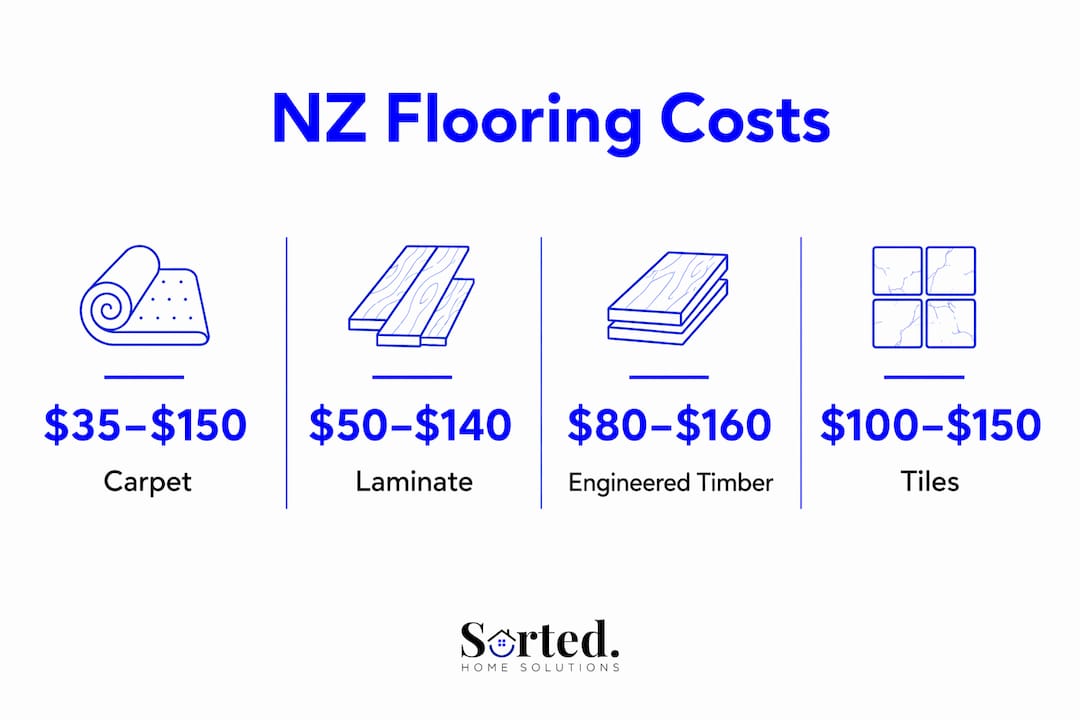
| Flooring type | Typical installed cost per m² |
|---|---|
| Carpet | $35–$150+ |
| Laminate | $50–$140 |
| Luxury vinyl plank | $50–$120 |
| Engineered timber (floating) | $30–$60 labour + supply |
| Engineered timber (glue-down) | $85–$110 labour only |
| Floor tiles | $80–$150 labour only |
Carpet is the most common choice for bedrooms and living areas. Carpet installation in New Zealand typically costs $35–$150+ per square metre installed, depending on the pile type and underlay grade. A full 3-bedroom home sits in the $5,000–$10,000 range.
Laminate suits high-traffic areas and open-plan spaces. It averages $50–$140 per square metre including materials, underlay, and labour. A 25m² room costs roughly $1,250–$3,500 depending on the product grade and installation complexity.
Engineered timber is popular in Auckland homes for its durability and appearance. Engineered timber supply in New Zealand ranges from $99 to $320 per m², with glue-down installation adding $85–$110 per m² and a 10% wastage allowance on top. A full 100m² home fitted with engineered oak typically costs $28,000–$36,000 all up.
Tiles carry the highest labour cost of any common flooring type. Professional tilers in New Zealand charge $80–$150 per m², with subfloor preparation adding a further $10–$30 per m². Waterproofing in wet areas adds another layer of cost on top.
Luxury vinyl plank sits in the middle of the price range and installs quickly. It suits rental properties and family homes where durability and budget both matter.
- Herringbone and chevron patterns increase material wastage by up to 15% and require specialised labour
- Herringbone installation for engineered timber costs $120–$150 per m² and can add 30–60% to the overall project cost
- Always factor in underlay, adhesive, and threshold strips when calculating total spend
Pro Tip: Use a flooring cost calculator to estimate your project before requesting quotes. It gives you a realistic baseline so you can identify when a quote is unusually high or suspiciously low.
What is the typical timeline for flooring installation?
Installation timelines depend on the flooring type, room size, and subfloor condition. Planning around these timeframes helps you schedule other trades and avoid disruption.
-
Site assessment. A qualified installer inspects the subfloor, measures the space, and identifies any preparation work required before installation begins.
-
Old flooring removal. Existing carpet, tiles, or boards are removed and disposed of. This phase can reveal subfloor issues that were not visible beforehand.
-
Subfloor preparation. Levelling compounds, moisture barriers, or structural repairs are completed. This phase has the most potential to extend the overall schedule.
-
Acclimatisation. Timber floors require time to adjust to the room's temperature and humidity. Solid timber flooring needs 48–72 hours of acclimatisation before installation begins. Laminate flooring requires 24–48 hours.
-
Installation. The flooring is laid according to the specified method. Carpet, laminate, and luxury vinyl plank typically install in 1–3 days. Tile and solid hardwood require 3–5 days due to adhesive curing and finishing steps.
-
Finishing. Skirting boards, thresholds, and trim are fitted. Grout cures on tiled floors. A final inspection confirms the installation meets the agreed standard.
A standard bedroom or living area in laminate or vinyl can be completed in a single day. A full home re-tile or hardwood installation across multiple rooms may take a full working week or more.
How to budget effectively and avoid unexpected costs
Getting an accurate flooring installation budget requires more than a per-square-metre estimate. The details in each quote determine whether your final invoice matches your expectations.
Request itemised quotes that separate materials, labour, subfloor preparation, disposal, and any additional services. A single lump-sum figure makes it impossible to understand what you are paying for or to compare quotes fairly.
Arrange an on-site assessment before committing to any price. A detailed site assessment avoids surprises by accounting for unique logistic challenges that affect both labour and timelines. No installer can give you an accurate price without seeing the subfloor.
Key budgeting considerations include:
- Add 10–15% to your material estimate for standard waste, and up to 20% for pattern layouts such as herringbone
- Complex patterns like herringbone require 15% more material wastage and specialised labour, a cost many homeowners miss entirely
- Coordinate flooring installation with other trades such as painting and skirting board replacement to reduce total project time and cost
- Choose quality labour over the cheapest quote. Budget-driven choices that skip proper subfloor preparation lead to early repairs and higher long-term expense
Pro Tip: When comparing flooring installation quotes, check whether each one includes the same scope. A quote that excludes disposal and subfloor prep may look cheaper but will cost more once those items are added.
You can also use the renovation cost calculator from Sortedhomesolutions to build a realistic project budget before you start collecting quotes.
Key takeaways
The most reliable way to control flooring installation cost is to get itemised quotes, arrange an on-site assessment, and budget for subfloor preparation before any work begins.
| Point | Details |
|---|---|
| Costs vary by material and method | Carpet starts at $35/m², engineered timber glue-down reaches $110/m² in labour alone. |
| Subfloor prep is the biggest hidden cost | Preparation costs can only be confirmed after existing flooring is removed. |
| Pattern complexity adds expense | Herringbone layouts require 15% more material and specialised labour, adding 30–60% to project cost. |
| Itemised quotes protect your budget | Separate line items for labour, materials, and disposal make quotes comparable and accurate. |
| Quality installation pays long term | Cheaper labour on poor subfloors leads to early failures and higher repair costs. |
What I have learned from watching homeowners budget for flooring
After working across dozens of Auckland renovation projects, the pattern I see most often is this: homeowners budget for the floor they want, then get surprised by the floor they already have.
Subfloor problems are not rare. They are the norm in older Auckland homes, particularly those built before the 1990s. Moisture damage, uneven concrete slabs, and rotted particleboard are common discoveries once the old carpet comes up. None of these show up in a quote based on measurements alone.
The second mistake I see regularly is choosing the cheapest installer without checking what the price actually covers. A quote that excludes subfloor preparation, disposal, and acclimatisation time is not a bargain. It is an incomplete scope. You will pay the difference later, usually at a less convenient moment.
My honest advice is to treat subfloor preparation as a non-negotiable line item, not an optional extra. The floor you see every day is only as good as what sits underneath it. Spending an extra few hundred dollars on proper levelling or moisture treatment protects a flooring investment that could cost tens of thousands of dollars.
Finally, coordinate your flooring installation with other trades. Painting before flooring goes in means you avoid drips on new boards. Skirting boards fitted after flooring means a cleaner finish. Small sequencing decisions like these save time and money without costing anything extra.
— Rudi
Flooring installation made clear with Sortedhomesolutions
Planning a flooring project in Auckland and not sure where your budget should sit? Sortedhomesolutions handles flooring installation as part of a full renovation service, coordinating trades from start to finish so nothing falls through the gaps.
You can review typical project pricing for flooring and related renovation work, or go straight to a personalised quote from the Sortedhomesolutions team. Every quote includes a site assessment so you know exactly what you are paying for before any work begins. No guesswork, no surprises.
FAQ
How much does flooring installation cost per m² in NZ?
Costs range from $35/m² for carpet up to $150/m² for tiled floors including labour. Engineered timber glue-down installation adds $85–$110/m² in labour on top of material costs.
What is the average cost to floor a 3-bedroom home in Auckland?
A 3-bedroom Auckland home fitted with carpet typically costs $5,000–$10,000 all up. Engineered timber across a full 100m² home can reach $28,000–$36,000 depending on the product and installation method.
How long does flooring installation take?
Carpet, laminate, and luxury vinyl plank install in 1–3 days. Tile and solid hardwood take 3–5 days due to subfloor curing and finishing requirements. Timber floors also require 24–72 hours of acclimatisation before installation begins.
Why do flooring quotes vary so much?
Quote differences usually come down to scope. Some quotes exclude furniture removal, disposal, and subfloor preparation. Always request itemised quotes and arrange an on-site assessment to get a like-for-like comparison.
Is laminate flooring cheaper to install than carpet in NZ?
Laminate flooring averages $50–$140/m² installed, which overlaps with mid-range carpet pricing. For a single room, laminate and carpet are often comparable in total cost, though laminate typically lasts longer in high-traffic areas.