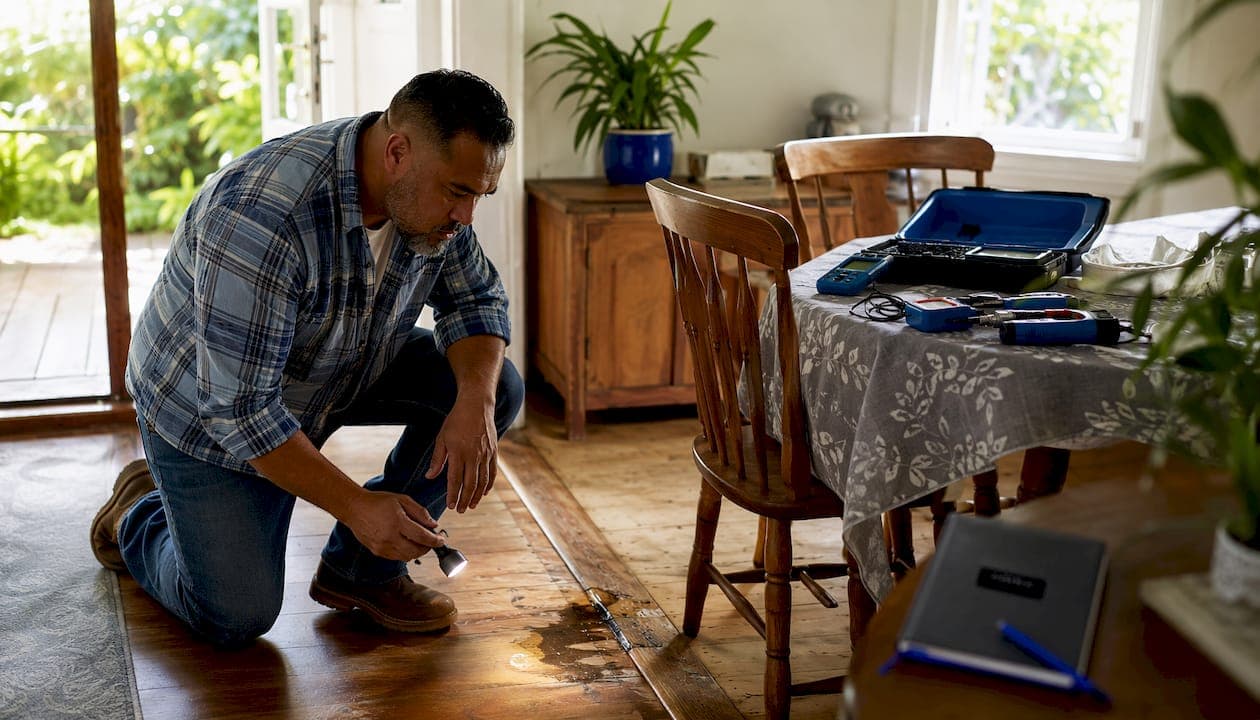
Which Auckland companies can repair water damage in your home?
Prompt, certified restoration is the single most important factor when water damages your home. The providers below cover Auckland and offer emergency response, IICRC certified technicians, and direct insurance claims support.
| Provider | Services | Response | Certifications | Insurance support |
|---|---|---|---|---|
| RESTATE® | Water, flood, mould, fire, biohazard, structural drying | 24/7 emergency | IICRC, SiteWise Gold | Yes |
| iDry Flood Restoration Auckland | Water extraction, thermal imaging, moisture mapping | 24/7 emergency | IICRC certified | Full claims management |
| QuickDry Restorations | Professional cleaning, water extraction, drying | Business hours | Not publicly listed | Partial |
| Steam 'n' Dry Carpet Flood Restoration Auckland | Carpet and floor flood restoration, drying | Prompt response | Not publicly listed | Not publicly listed |
| Flood Restoration Auckland | Flood extraction, drying, remediation | 24/7 emergency | Not publicly listed | Yes |
| Alder Homes Ltd | Structural repairs, rebuilds post-water damage | Standard hours | Licensed building practitioner | Insurer coordination |
| Aries Builders Limited | Post-flood structural repairs, consent management | Standard hours | Licensed building practitioner | Insurer coordination |
Key standouts at a glance:
- RESTATE® holds both IICRC certification and SiteWise Gold health and safety accreditation, covering the full restoration scope from mould removal to biohazard cleaning.
- iDry Flood Restoration Auckland uses thermal imaging moisture mapping and manages insurance claims end to end.
- Alder Homes Ltd and Aries Builders Limited are the builders to call once drying is complete and structural reinstatement is needed.
- QuickDry Restorations and Steam 'n' Dry focus on floor and carpet recovery, useful for contained incidents.
Table of Contents
- How do Auckland's water damage repair providers compare?
- How do you choose the right water damage repair service in Auckland?
- What does the water damage repair process actually involve?
- What do Auckland homeowners need to know about insurance and safety?
- What types of water damage repair and restoration services exist?
- What does it cost to repair water damage in a home?
- What hidden damage should you watch for during repairs?
- Sortedhomesolutions handles the full repair, not just part of it
- Key takeaways
How do Auckland's water damage repair providers compare?
Choosing between providers comes down to the scope of damage, your insurer's requirements, and how quickly you need someone on site.
| Provider | Coverage area | Pricing transparency | Customer reviews |
|---|---|---|---|
| RESTATE® | Greater Auckland | Quote on request | Strong positive ratings |
| iDry Flood Restoration Auckland | Auckland-wide | Quote on request | Highly rated, IICRC noted |
| QuickDry Restorations | Auckland | Quote on request | Positive cleaning reviews |
| Steam 'n' Dry | Auckland metro | Quote on request | Consistent carpet reviews |
| Flood Restoration Auckland | Auckland | Quote on request | Positive emergency response |
| Alder Homes Ltd | Auckland | Fixed-price quotes | Project case studies available |
| Aries Builders Limited | Auckland | Fixed-price quotes | Project case studies available |
Key differentiators:
- RESTATE® and iDry are the strongest options for full-service restoration requiring certified moisture monitoring and insurance documentation.
- Alder Homes and Aries Builders step in for the rebuild phase, handling building consent requirements and NZ Building Code compliance.
- None of the providers above publicly list fixed pricing, which is standard practice for water damage work given the variability of each job.
How do you choose the right water damage repair service in Auckland?
The right provider depends on the type and scale of damage, your insurance policy, and whether the work requires building consent.
Factors to evaluate:
- Certification: IICRC-certified technicians follow internationally recognised drying and remediation standards. SiteWise Gold accreditation signals verified health and safety practices on site.
- Response time: Mould can begin growing within 24–48 hours of water intrusion. A provider who cannot mobilise within hours is a liability.
- Insurance support: Providers experienced with NHCover and private insurer claims reduce delays. Ask whether they document moisture readings and produce reports your insurer will accept.
- Building Code knowledge: Permanent repairs must comply with the NZ Building Code. Providers unfamiliar with Building Code Clause E3 risk producing non-compliant wet area linings.
- Customer reviews and case studies: Look for documented project outcomes, not just star ratings.
Pro Tip: Hire a provider familiar with natural hazard claims under the Natural Hazards Insurance Act 2023. They will know how to coordinate with your private insurer, who manages both private and NHCover portions of the claim after 1 July 2024.
Avoid engaging any tradesperson who cannot show current licensing, and do not attempt to reline walls yourself before moisture content has been independently verified. Premature relining traps moisture and voids insurance coverage.

What does the water damage repair process actually involve?
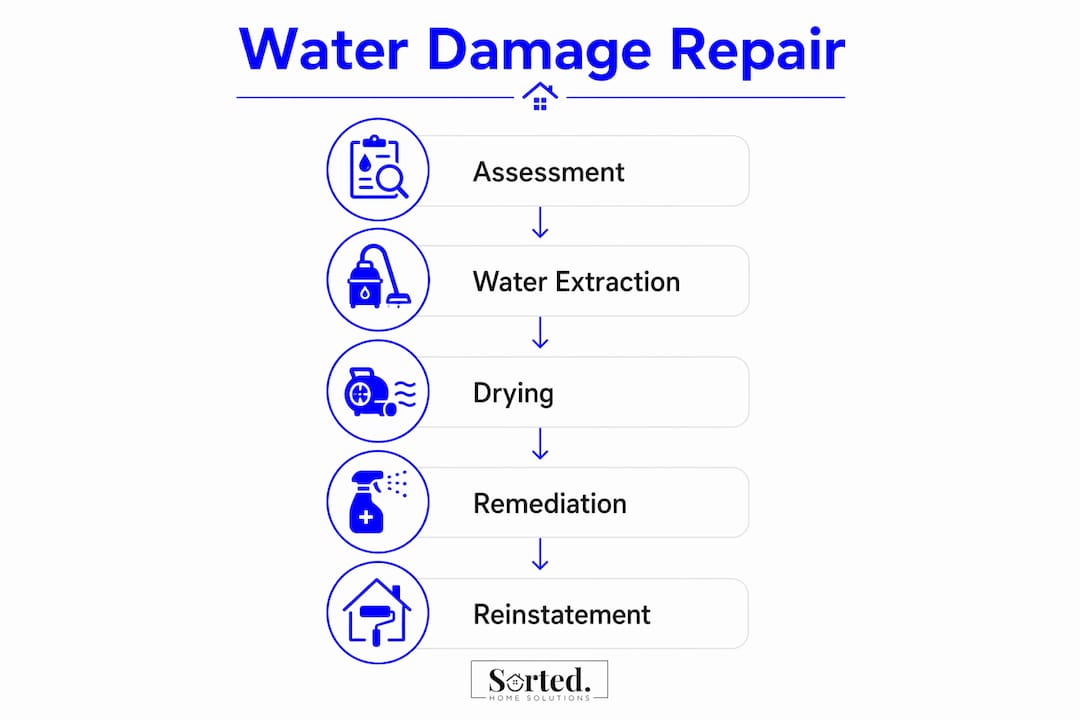
Fixing water damage in a home follows a defined sequence. Skipping steps, particularly drying verification, causes long-term structural and health problems.
Stage-by-stage process:
- Stop the source. Turn off water supply, isolate electricity and gas, and document all visible damage with photos and video before touching anything.
- Water extraction. Industrial pumps and wet vacuums remove standing water. Saturated carpets, insulation, and plasterboard (Gib) are removed promptly.
- Structural drying. Commercial dehumidifiers and fans run continuously. Drying can take several months for a seriously affected home. Avoid excessive heat, which warps timber framing.
- Moisture monitoring. Technicians use moisture meters to track timber framing. Timber must reach 18% or less moisture content before any relining begins.
- Mould remediation. Any mould growth is treated and affected materials removed. IICRC protocols govern containment and cleaning procedures.
- Structural repairs. Once moisture thresholds are confirmed, plasterboard, flooring, and structural elements are reinstated. Wet area surfaces must meet NZ Building Code E3 requirements for impervious, cleanable finishes.
- Final inspection. A licensed building practitioner or council inspector signs off where consent was required.
For guidance on emergency roof repair as a source of water entry, the process above applies once the entry point is sealed.
What do Auckland homeowners need to know about insurance and safety?
New Zealand's insurance framework for water damage changed on 1 July 2024. Under the Natural Hazards Insurance Act 2023, homeowners lodge claims with their private insurer, who manages both the private policy portion and the NHCover portion from start to finish.
Safety before re-entry:
- Confirm the property is structurally sound before entering.
- Have a registered electrician and licensed gas worker isolate electricity and gas before any work begins.
- Wear protective gear when handling flood-affected materials, which may contain contaminants.
Insurance best practices:
- Photograph and video all damage before moving or disposing of anything.
- Lodge your claim as soon as practical. Delays beyond three months may complicate acceptance.
- Urgent repairs to protect life, health, or property can proceed without building consent under section 41(1)(c) of the Building Act. Permanent reinstatement requires consent and full Building Code compliance.
- Keep all invoices and repair records. Your insurer will require documented proof of costs.
- Do not reline walls until moisture content is verified. Relining over damp framing breaches Building Code Clause E3 and risks future mould claims being declined.
Drying timeline: A flood-affected home in New Zealand may take 3–4 months to dry sufficiently for relining. Mould can establish within 24–48 hours of water intrusion, so extraction and ventilation must start immediately.
What types of water damage repair and restoration services exist?
Water damage repair covers a broader range of services than most homeowners expect. The category splits into three practical tiers.
Emergency and extraction services address the immediate crisis: water pumping, wet material removal, and initial drying setup. These are time-critical and require 24/7 availability.
Remediation services deal with the consequences of prolonged moisture: mould treatment, contamination cleaning, and air quality management. IICRC-certified providers follow structured protocols for containment and disposal.
Structural reinstatement covers the rebuild: replacing plasterboard, flooring, cabinetry, and structural framing once drying is confirmed. This phase often requires building consent and must comply with the NZ Building Code. A practical guide to wall repairs covers the specifics of post-flood wall reinstatement for Auckland homes.
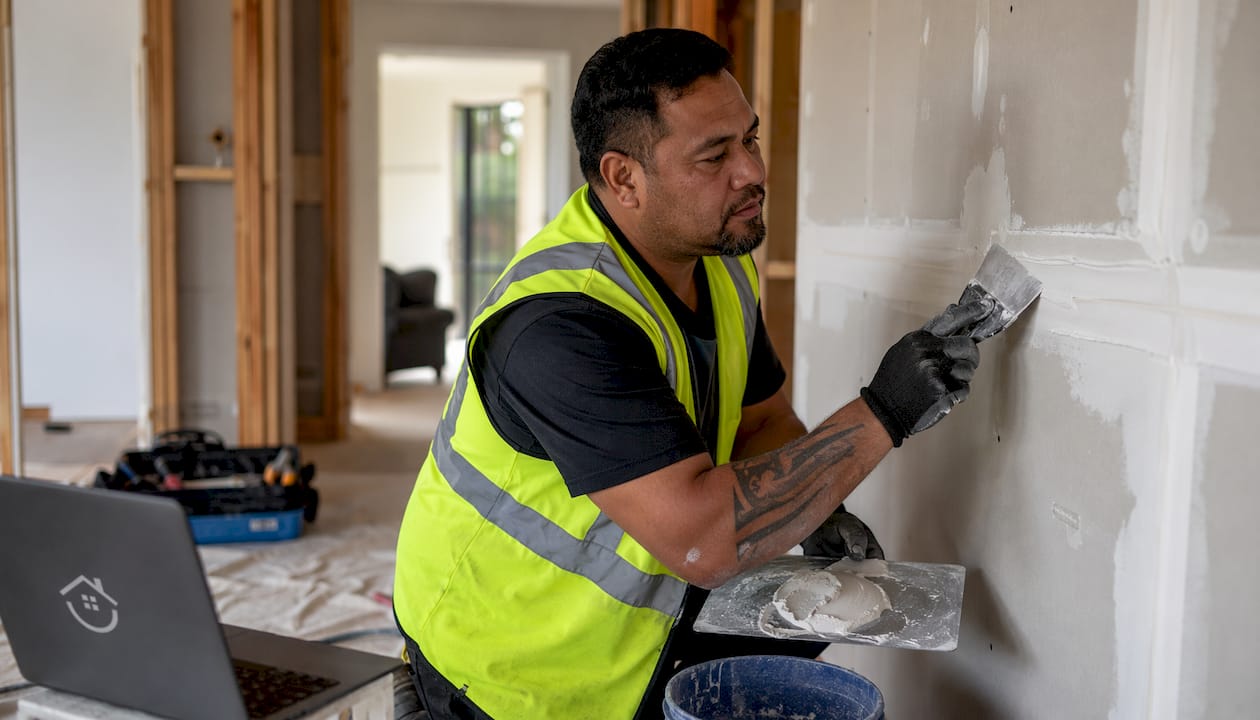
Some providers cover all three tiers. Others specialise in one. Knowing which tier your situation requires helps you engage the right tradesperson at the right time.
What does it cost to repair water damage in a home?
The cost to repair water damage in a home varies widely depending on the source, extent, and duration of the damage. A minor leak caught early costs far less than a flood that saturates wall cavities and subfloor framing.
General cost drivers include the volume of water extracted, the number of affected rooms, whether mould remediation is required, and whether building consent is needed for reinstatement. Labour rates in Auckland are higher than in regional New Zealand, and material costs for compliant wet area finishes add to the total.
For a realistic budget estimate, the renovation cost calculator on the Sortedhomesolutions blog covers repair cost ranges for Auckland homes. Your insurer's assessor will produce a formal scope of works and costing once the damage assessment is complete.
What hidden damage should you watch for during repairs?
Water travels further than it appears. The visible wet patch on a wall often represents a fraction of the actual affected area.
Common hidden complications:
- Concealed mould in wall cavities: Mould grows on the back of plasterboard and on framing before it appears on the surface. Thermal imaging and moisture meters are the only reliable detection tools.
- Subfloor saturation: Water tracks under floor coverings and into subfloor framing. Timber subfloors can rot without any visible surface damage.
- Insulation damage: Wet insulation loses thermal performance and holds moisture against framing for months. It must be removed and replaced, not dried in place.
- Electrical and plumbing compromise: Water in wall cavities contacts wiring and pipe connections. A licensed electrician must inspect before power is restored.
- Foundation movement: Prolonged saturation can destabilise soil under foundations, causing cracking at wall junctions. If you see new corner cracks after flooding, engage a structural engineer before relining.
Skipping a thorough assessment to save time or money typically results in a second, more expensive repair within a few years.
Sortedhomesolutions handles the full repair, not just part of it
Water damage repair rarely ends with drying. The rebuild phase, replacing linings, flooring, cabinetry, and wet area finishes, is where most homeowners hit delays because they are coordinating multiple trades separately.

Sortedhomesolutions manages every trade under one contract, from the first inspection through to the final sign-off. Plumbing, electrical, plastering, painting, and flooring are all coordinated by a single project manager, so you are not chasing four different contractors while your home sits open. For Auckland homeowners dealing with insurer timelines and Building Code requirements, that single point of contact removes a significant amount of friction. See the full scope of services and fixed-fee pricing to understand what a complete repair costs before you commit.
Key takeaways
Certified, insurance-aware water damage repair in Auckland requires immediate extraction, verified drying to 18% or less timber moisture content, and Building Code-compliant reinstatement before any relining begins.
| Point | Details |
|---|---|
| Act within 24–48 hours | Mould can establish within 24–48 hours of water intrusion; extraction must start immediately. |
| Drying takes 3–4 months | A seriously affected home may take 3–4 months to dry; relining before moisture thresholds are met breaches the Building Code. |
| Lodge insurance claims promptly | Contact your private insurer immediately; delays beyond three months may complicate NHCover claim acceptance. |
| Urgent repairs need no consent | Emergency work under section 41(1)(c) of the Building Act can proceed without consent; permanent reinstatement requires it. |
| Sortedhomesolutions covers the full rebuild | One team manages all trades from drying through to finished reinstatement, with a single fixed-fee contract. |